

Ecocide, in simple terms, is the destruction of the environment by deliberate or negligent human action. According to an independent expert panel, ecocide means “unlawful or wanton acts committed with knowledge that there is a substantial likelihood of severe and either widespread or long-term damage to the environment being caused by those acts.” Living in an era where environmental sustainability is being prioritized, ecocide is a prevailing issue. Ecocide has been utilized as a deliberate part of warfare throughout history. A key example of this is the use of Agent Orange (a dangerous herbicide mixture) during the Vietnam War. This shows that even though ecocide is a reasonably new term, the practice of it is not, particularly in warfare.
Today, cases of ecocide are being investigated in the Russia-Ukraine War. There has been widespread damage to Ukraine’s ecosystems. Shelling, the moving of machines like tanks, and the construction of trenches have left the Ukrainian landscape scarred. There have also been impacts on protected areas such as national parks and nature reserves, which comprise a significant portion of Ukraine’s territory.
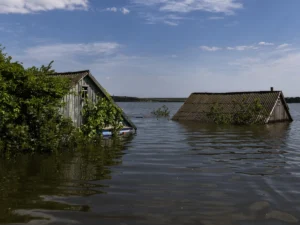
There has also been significant contamination of water sources due to the destruction of dams, water supply systems, and sewage infrastructure. The Kakhovka dam was destroyed in June 2023. This led to severe flooding and large amounts of contaminants leaked into the Dnipro River and surrounding areas.
Military actions have also caused extreme forms of soil and air pollution. Shelling and explosions have contaminated Ukraine’s soil with heavy metals and chemical pollutants from destroyed munitions. In the long term, the soil will become infertile, leading to issues in agriculture and human health due to farm-grown produce. Fires from shelling and burning forests have released greenhouse gases, like carbon dioxide, into the atmosphere, making the air unhealthy to breathe and contributing to climate change.
The country has also had a devastating impact on flora and fauna. The conflict has disrupted migration routes for many creatures, destroyed habitats, and killed countless animals. Many endangered species are also nearing extinction since they inhabit many of Ukraine’s almost destroyed unique ecosystems.
All the destruction being caused in Ukraine has legal and international implications. Russia is being investigated for many war crimes, of which ecocide is one of the crimes. There are, however, some difficulties when it comes to holding the perpetrators accountable. For a case to be referred to the International Criminal Court (ICC), the damage must be proven to be widespread, long-term and severe. Ukraine is currently pushing for ecocide to be recognized as a standalone international crime.
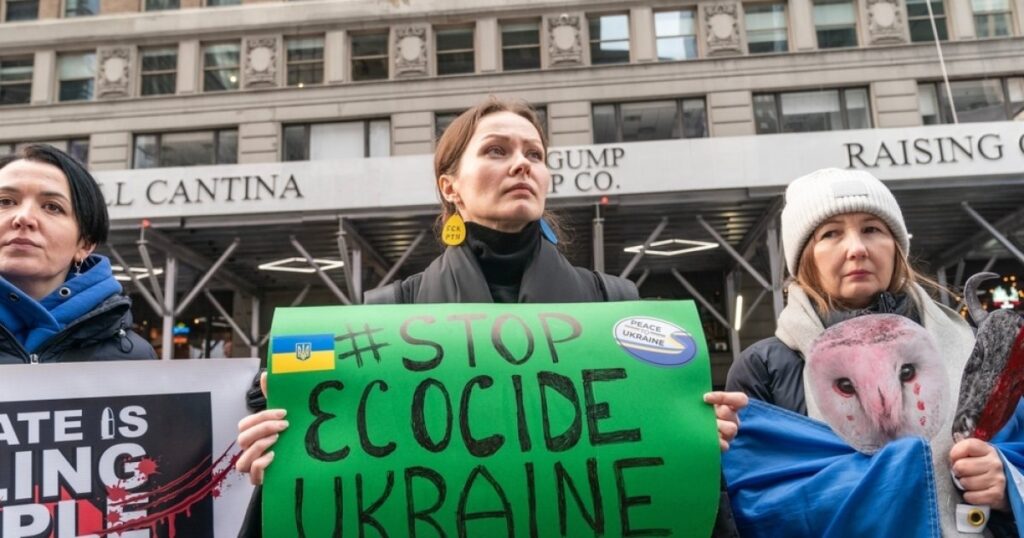
The environment is a silent victim of the war, suffering long-term consequences that will outlast the conflict for years to come. Post-war reconstruction should include a focus on environmental recovery. Action should be taken sooner rather than later to preserve what is left of the Ukrainian ecosystem and rebuild infrastructure.