

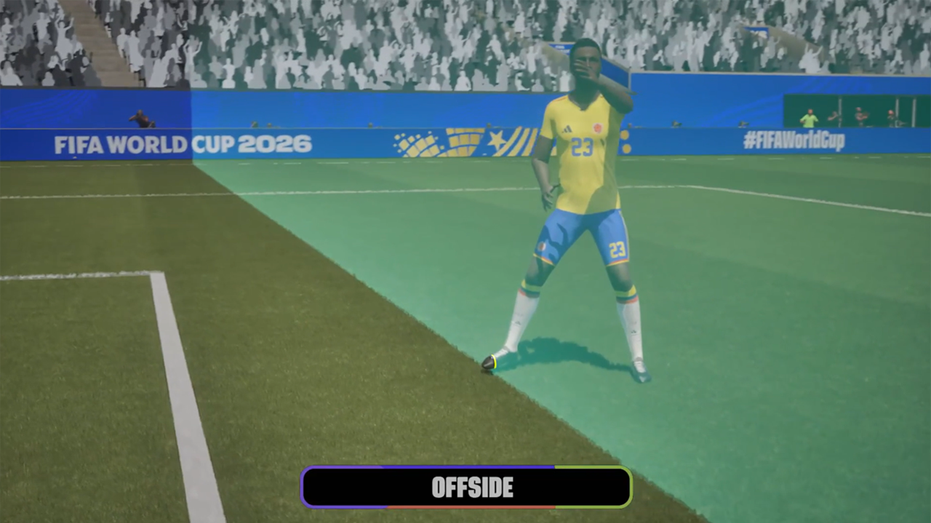
Even with its conclusion, the World Cup is still all anyone can talk about these days. Its ability to bring the whole planet, with people coming from various backgrounds, together for a game of football (or soccer if you’re from the US) is incredible. This one, like all FIFA World Cups, has had its fair share of celebration, heartbreak, drama, and, of course, state-of-the-art technology. Tech has played a more important role in this World Cup than ever before, and it’s everywhere — in the VAR referee’s equipment, AI-generated offside visuals, the filming equipment, and the football itself.

Lenovo, one of the sponsors of this World Cup, had contributed to a lot of the tech. If someone had yelled at the offside animations from this World Cup, they should thank Lenovo, because Lenovo generated those offside visuals we had seen all season using AI. Lenovo also offered something called FIFA AI Pro. Essentially, after each game, players got an incredible amount of stats and insights to find ways to improve their game. The referee cam was also one of Lenovo’s contributions. Lenovo also designed a 3D “digital twin” of the World Cup stadium for VAR referees to visualize each moment and take more accurate decisions. Lenovo AI is also being used to enhance and streamline viewers’ experiences at the venues themselves by optimizing logistics at the stadium.
As for the actual offside calls themselves, FIFA uses the Semi-Automated Offside Technology (SAOT) to make those calls. SAOT has a 16-camera system at each stadium, which tracks the ball and 29 points in each player’s body to determine if a player is offside at any point. This tech automatically alerts the VAR of potential offsides for them to review. The advanced version of this tech also alerts the referees on the field to lift the offside flag. Generally speaking, referees on the field wait to lift the offside flag so as not to deny a team a goal-scoring opportunity in case there was actually no offside. However, seeing how precise this technology already is, maybe in future World Cups, offsides can be called instantly to spare fans from the heartbreak of a goal being removed because of an offside pass in the sequence.
On the outside, the Adidas Trionda ball proudly represents the 3 host countries in color. Inside, the football itself is packed with a lot of tech. Within its 4-panel polyurethane build is an Inertial Measurement Unit (IMU) sensor. This sensor tracks movement, spin, touches, and more in real time, transmitting data 500 times per second. This data is then processed by AI, along with the camera footage from various angles, to assist FIFA’s SAOT and other VAR decisions. This is the smartest football ever used in the World Cup.
The advanced tech being used had also been controversial. One example is Mostafa Zico’s 58th
minute goal for Egypt in the Argentina vs Egypt Round of 16 match. This goal was denied due to a foul that happened across the field when Egypt got possession of the ball. Some have argued that since the foul happened long before the goal, this is VAR overstepping its jurisdiction, and maybe without the advanced technology, the foul would’ve been overlooked. Either way, the tech itself is programmed to be unbiased. If there is bias, it’s from the user’s interpretation of the tech’s results. FIFA’s objective with the tech is to level the playing field for teams without as many resources and funding as other teams, like with FIFA AI Pro, and who knows what advancements we’ll see at the centennial World Cup in 2030.