

We may be building a new island between Hawaii and California. Not one that is hospitable, beautiful, or even healthy, but already spanning more than 1.6 million km2. This “island”, called the Great Pacific Garbage Patch, contains an estimated 1.8 trillion pieces of garbage, most of which are microplastics less than 5 mm wide. Rather than a solid piece of garbage in the middle of the plastic, this path resembles a “soup” of trash, primarily from marine debris (like fishing nets) that coagulate together. Marine life near the area is constantly endangered as they often get trapped within the patch with no way out. With this monstrosity growing as more debris is added, several climate organizations are trying to tackle the extent of this problem.
One such initiative is led by organizations in nearby Hawaii. The Center for Marine Debris Research at Hawaii Pacific University in Honolulu has launched the program Nets to Roads, where microplastics and fishing nets are converted into material for paving Hawaii recycled plastic roads. The process takes plastics, specifically containing the non-biodegradable polyethylene, collected from Hawaiian beaches and sends them to factories in the US mainland that shred them. This material is sent to factories around Hawaii, where it is mixed with other materials to create asphalt.
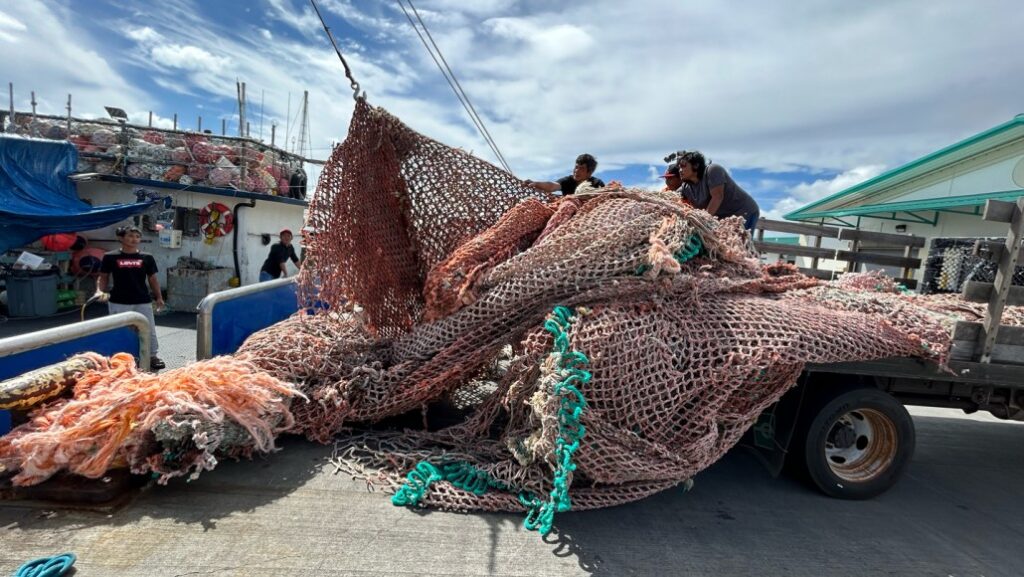
Experimentation with this material started in 2022, when scientists paved certain parts of roads in Hawaii with varying combinations of asphalt, rubber, and other solvent mixtures. According to research lead Jeremy Axworth, “By reusing plastic waste that is already in Hawaii, we can reduce the environmental and economic impacts of transporting waste plastics from the islands, incinerating it or dumping it in Hawaii’s overflowing landfills.”
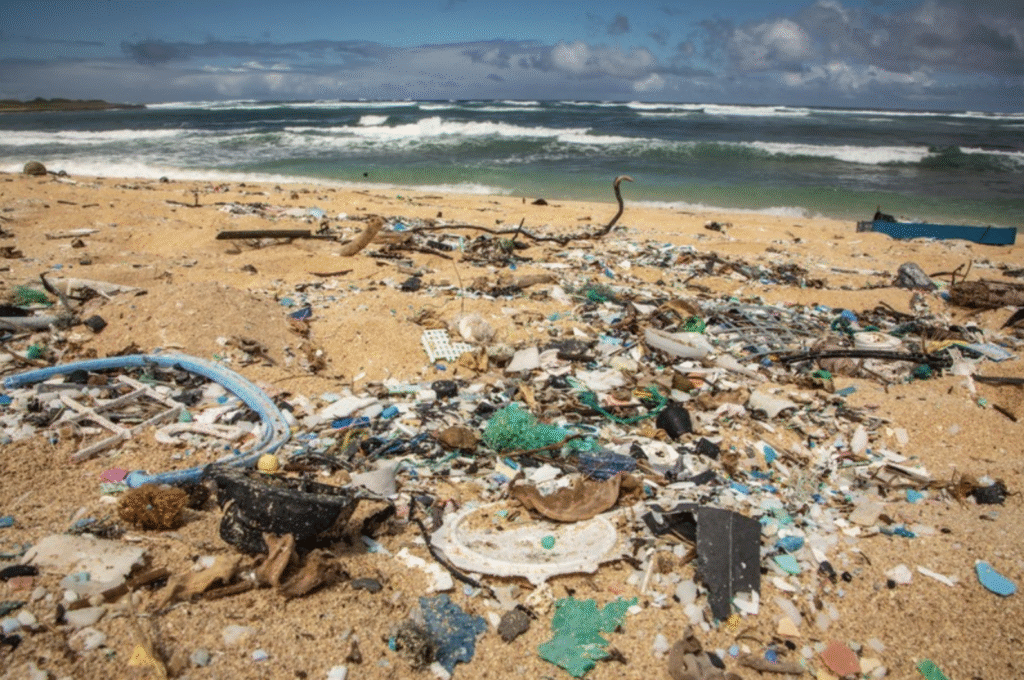
The primary concern was whether the microplastics in the asphalt would break down into the nearby environment, exacerbating the same concern that first launched this program. After preliminary testing in which the marine waste-enforced asphalt was compared against traditional paving materials, it was found that there was no significant difference in the microplastics released to the environment. Further studies are ongoing with additional variations in the mixture: with and without rubber, different types of plastics, and unique solvents. While the results seem promising, researchers have reinforced that another concern for the scalability of this project is the uniqueness of Hawaii’s geography compared to the mainland US. The asphalt formulation that is most effective for Hawaii may not (and likely is not) what will work in other parts of the United States.
Since 2020, most of Hawaii’s roads have been paved with some form of polymer-modified asphalt (PMA) to move towards a greener infrastructure, and these ongoing experiments only support the promise of durable, environmentally responsible infrastructure when sustainability is prioritized.