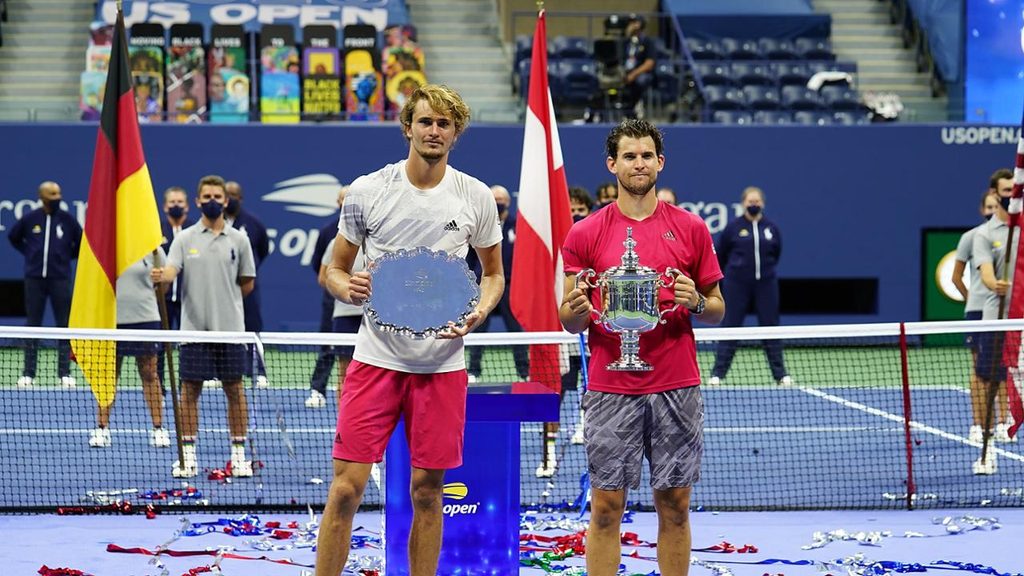
How many times can a player come close before “almost” becomes the only thing people remember? For Alexander Zverev, that question followed him for years. He had the talent, the powerful serve, the massive forehand, and the ability to compete with the best players in the world, yet the one trophy that mattered most continued to escape him. In 2020, Zverev reached his first Grand Slam final at the US Open and seemed moments away from becoming champion after taking a two-set lead against Dominic Thiem.
For Alexander Zverev, that question followed him for years. He had the talent, the powerful serve, the massive forehand, and the ability to compete with the best players in the world, yet the one trophy that mattered most continued to escape him. In 2020, Zverev reached his first Grand Slam final at the US Open and seemed moments away from becoming champion after taking a two-set lead against Dominic Thiem.
Photo Credits: US Open
Instead, Thiem fought back and won, leaving Zverev with one of the most painful losses of his career. But that was only the beginning. Zverev would go on to reach two more Grand Slam finals, at the French Open in 2024 and the Australian Open in 2025, and lose both. Three finals. Three defeats. Each one brought the same question: would he ever actually win a major?
As the years passed, the pressure grew. The young player once labeled a future Grand Slam champion was now 29, and suddenly his age became another reason to doubt him. Was his opportunity disappearing? Had he waited too long? In 2022, disaster struck when Zverev suffered a serious ankle injury during his French Open semifinal against Rafael Nadal, forcing him to leave the court and begin another long road back. Yet he kept fighting. And in 2026, everything finally changed. At Roland-Garros, Zverev defeated Flavio Cobolli in five sets to win his first-ever Grand Slam title at 29 years old.
Photo Credits: Southeast Missourian
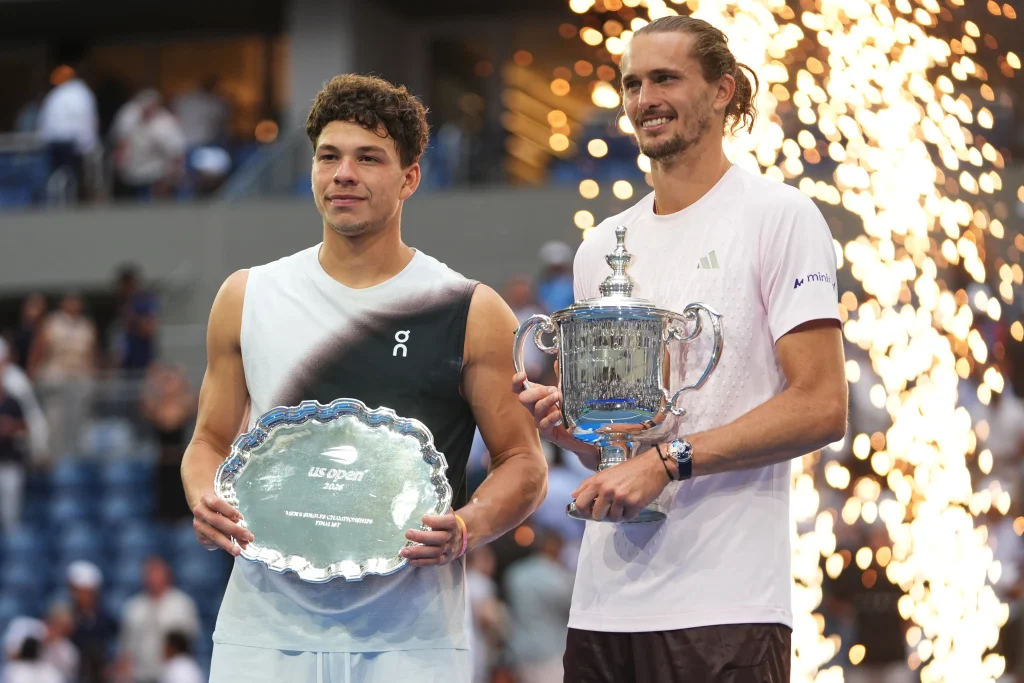
After years of heartbreak, the “almost” was finally gone. But he wasn’t finished. Just three months later, Zverev returned to New York for the US Open, the same tournament where his Grand Slam dream had once slipped away. This time, there was a different feeling. Facing American Ben Shelton in the final, Zverev stayed composed and won in four sets, 6–3, 7–6(2), 5–7, 6–2. The US Open trophy was finally his.
The player who once watched a two-set lead disappear had returned years later and finished the job. Now, Zverev has two Grand Slam titles, winning Roland-Garros and the US Open in 2026, while also reaching the Wimbledon final and the Australian Open semifinals this season. His career suddenly looks completely different. For years, his story was about what he had failed to accomplish. Now, it’s about what he refused to give up on. The losses, the injury, the criticism, and the pressure didn’t disappear when he lifted the US Open trophy. They became part of what made the moment truly meaningful to him at this point of his tumultuous journey to greatness. Zverev’s victory is a reminder that careers aren’t always defined by when success happens, but by what happens when an athlete refuses to stop chasing it. For years, he was the “to be” champion. Now, there is no “almost”. There is only Alexander Zverev, two-time Grand Slam champion.