
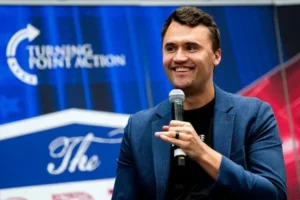
On Wednesday, September 10th, conservative activist Charlie Kirk, founder of the youth program Turning Point USA, was shot and killed while at an event at Utah Valley University. At 31 years old, his death, leaving behind a wife and two young children, marks another tragic entry in America’s growing pattern of political violence.
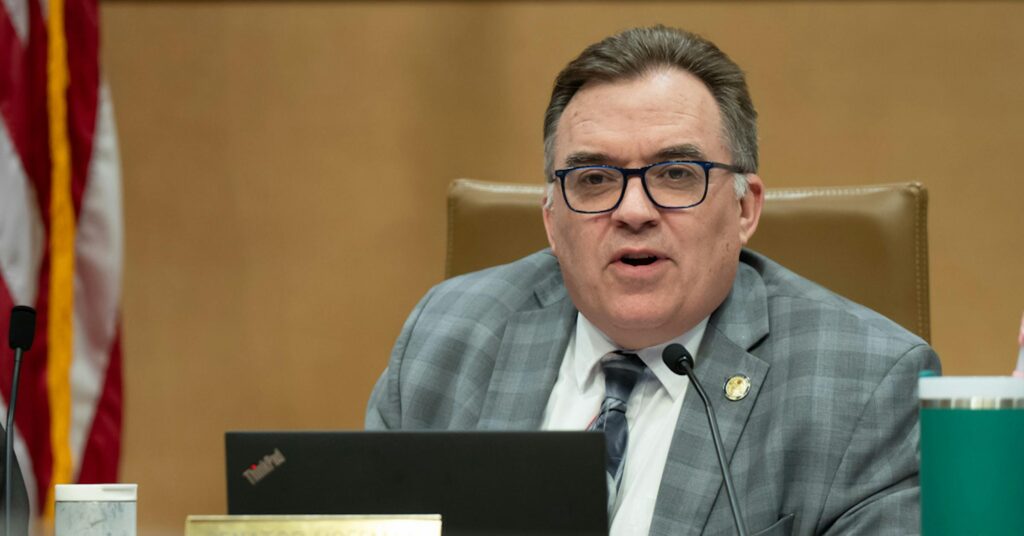
Unfortunately, this is not the first case of brutality towards public figures in America. In July 2024, an assassination attempt was made on President Donald Trump at a campaign rally near Butler, Pennsylvania. More recently, Minnesota State Senator John Hoffman and State Representative Melissa Hortman were both attacked and shot in their own homes; Hortman did not survive.
These attacks mark a dangerous escalation of violence against political figures, shaking the sense of safety for public officials across the nation. The surge is not haphazard—it is fueled by partisan polarization, reckless divisive rhetoric, and the viral spread of extremism online. When such a horror is left unchecked, it risks reframing political brutality as normal. To stop this oversight of brutality, leaders must be held accountable for the words they use, platforms must curb the reach of extremist networks, and citizens must remember opponents are neighbors, not enemies.
American author and journalist Philip Gourevitch once spoke the powerful words: “The piled-up dead of political violence are a generic staple of our information diet these days…The horror becomes absurd,” painting political violence as a grave monster that torments nations through fear.
However, this monster of domestic terrorism is not new to our country. The assassinations of figures such as Abraham Lincoln, John F. Kennedy, and Martin Luther King Jr. are all examples of individuals believing that they can silence ideas they oppose with a bullet.
The persistence of political violence stems from a grave problem — polarization. Americans increasingly sort themselves into opposing parties, with each convincing themselves that the other is not just wrong but dangerous. Political scientist Lilliana Mason argues in Uncivil Agreement that “We have become so divided that our partisan identities can overshadow our shared national identity.” Mason’s words reveal that groupings based around opinions and beliefs have the potential to distract from generally shared experiences. When citizens stop seeing their opponents as neighbors and start seeing them as enemies, the leap to violence becomes conspicuous.
The increased polarization caused by modern politics is magnified by rhetoric that encourages escalation. Politicians and media figures often speak with dehumanizing language, describing rivals as threats to freedom, morality, or even the very survival of the nation. Communication scholar Jennifer Mercieca notes that “It certainly doesn’t help us to solve political problems to think of our opponents as enemies who are out to get us. Instead it helps to cultivate outrage, erode trust and fellow feeling, and increase the potential for actual violence.” As a result, such extreme reactions lead to a political environment where compromise is seen as a complete surrender, and individuals with differing opinions are seen as existential enemies.
Such rhetoric does not just stay confined to speeches and campaign rallies— it travels chasms. In a time marked by digital innovation, fringe conspiracy theories and extremist content can reach millions of individuals within mere seconds. As one report from PublicTechnology.net placed this context into perspective, “All mainstream social media and file-sharing platforms have been touched by extremist activism to some extent.”
Online radicalization does not only spread anger; it normalizes it and creates an environment where violent solutions sound reasonable.
Additionally, social media platforms are designed to promote certain ideas based on their viewing. These algorithms contribute to the diffusion of extreme views and ideas, persuading individuals to believe that certain opinions are right or wrong and making some views more prevalent than others. The frequency in which radical views are presented through media simply is not realistic, and it has the potential to give individuals false perceptions about the world around them.
Many view politically-motivated attacks as isolated tragedies rather than symptoms of a larger problem. Treating these horrific cases of violence as individual incidents or events is dangerous, because it hides the systemic roots that make these attacks more likely. If citizens shrug off violence as inevitable instead of addressing the issue, the descent into disorder and lawlessness continues.
Democracy requires more than ballots and institutions; it requires trust. Right now, America is laying in a state of broken trust and boiling anger. When violence becomes normalized, the steam of hate diffuses amongst the nation and trust evaporates into fear. Ordinary people start fearing that speaking, writing, or even voting could carry mortal consequences. Political scientist Robert Dahl once described democracy as a system that depends on “mutual security”—the assurance that opponents may severely disagree in words but will not destroy each other with weapons. That security is what is crumbling in this treacherous state of the nation.
Ultimately, the pattern of attacks is not simply about the tragic deaths. It is about whether America can remain a nation where disagreement does not end in bloodshed. Unless polarization is tempered, rhetoric is moderated, and online platforms are held accountable, the future may hold headlines of violence rather than broadcasts of peace—and with them, a democracy shatters, unable to withstand its own divisions. Without change, America risks becoming a nation where bullets, not ballots, decide its future.