

Just this month, scientists have pioneered a method to build a memory device using one of the most storage-efficient tools in the world––our own DNA. Purely considering biology, the genetic material written in our DNA contains an extraordinary amount of information about every aspect of our existence, from the traits we inherit to the microscopic instructions that keep our cells functioning. But what if DNA could store more than the blueprint for life? Researchers at Penn State have taken a step toward answering that question by developing a memory device that uses DNA itself as an active component, transforming nature’s information-storage system into a potential foundation for ultra-efficient computing. Their work could point toward a future in which the molecules inside our cells inspire memory chips capable of storing and processing information in entirely new ways.
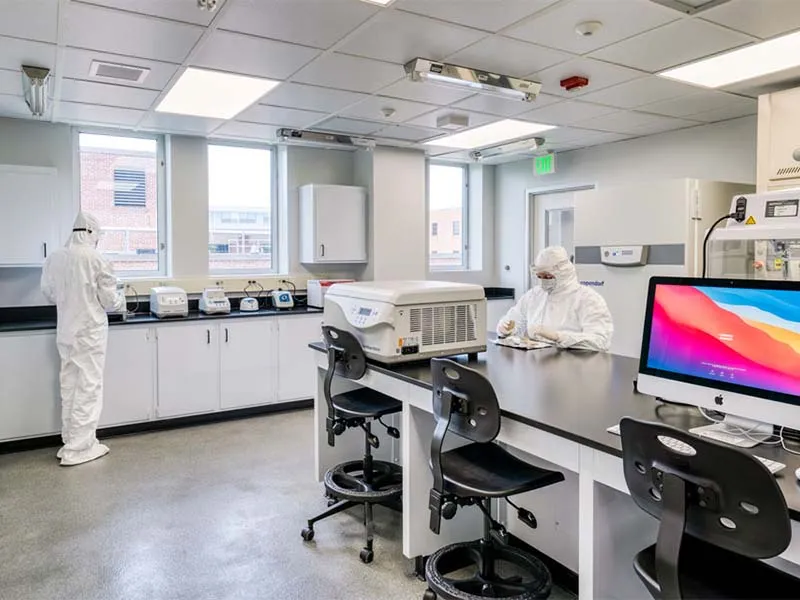
According to Science Daily, “a single gram [of DNA] can hold about 215 million gigabytes of data,” which scales to more than 840K smartphones. Uniquely, the memory resistor (or memristor) mimics the neurons in the brain more than traditional resistors in the sense that they allow information to be stored and processed in the same place. The device can use less than 0.1 volts to respond and, according to the researchers, remained functional for more than six weeks. Postdoc researcher and co-author Kavya Keremane mentioned that “by combining the information storage capabilities of DNA with the exceptional electronic properties of perovskite semiconductors, we created a bio-hybrid system that fundamentally changes how low-power memory devices can be designed.”
To create the device, the researchers used short, customized strands of synthetic DNA, designing their sequences to give them greater structural control than natural DNA. They then added silver nanoparticles into the DNA structures, allowing the genetic material to conduct electricity while organizing its molecular components into a more orderly arrangement. Finally, this version was integrated with thin films of perovskite, a semiconductor known for its electronic properties. Together, the two materials formed pathways that directed the flow of electrons through the device, allowing it to store and process information with remarkable efficiency. The combination proved especially important: while neither DNA nor perovskite alone produced the same results, their combination created a stable, high-density memory device that consumed a fraction of the power required by comparable technologies.
Now, with the rise of AI applications encroaching on almost every industry, the need for low-power, high-storage resources is higher than ever. While work still remains for this research to be production-ready, it is a unique and innovative new direction for electronics. Interestingly, this is another example of how cross-disciplinary studies, particularly between technology and biology, have led to mutual benefit. From deep learning models mimicking neural connectivity to feature engineering following the biological basis of vision to now resistors simulating the strengths of genetic data, building cutting-edge technology seems to run parallel to understanding the centuries-old machine that is the human body.